
Free lesson plan · MyPlate · Grades 3 to 8
To teach kids to build a balanced plate, introduce the five food groups with one job each, have teams sort illustrated food cards into the groups, then challenge them to build a meal where half the plate is fruits and vegetables, with a grain, a protein food, dairy and water or milk to drink. This free lesson gives you the script, the food cards and the challenge in one 45-minute class.
By Amy Roskelley, health educator (B.S. in Health Education), Health Beet. Based on USDA MyPlate and the Dietary Guidelines for Americans, 2025 to 2030. Last reviewed November 17, 2026.
| Grades | 3 to 8, with options for grades 3 to 5 and 6 to 8 |
|---|---|
| Time | 45 minutes |
| Group size | Whole class, working in teams of 3 to 5 |
| Settings | Health, PE, science and FCS classes, after-school programs, school nutrition, SNAP-Ed and Extension visits |
| Materials | One set of food cards and one plate per team (a MyPlate portion plate or a paper plate with the sections drawn in), challenge cards, a worksheet per student |
| Prep | About 15 minutes to print and cut the cards |
By the end of the lesson, students will be able to:
Ask students to think of a favorite dinner, the kind they’d pick on their birthday. Have a few share and write the foods on the board.
“Today you’re going to become plate builders. By the end of class you’ll know how to turn any meal, even your favorite, into a balanced plate.”
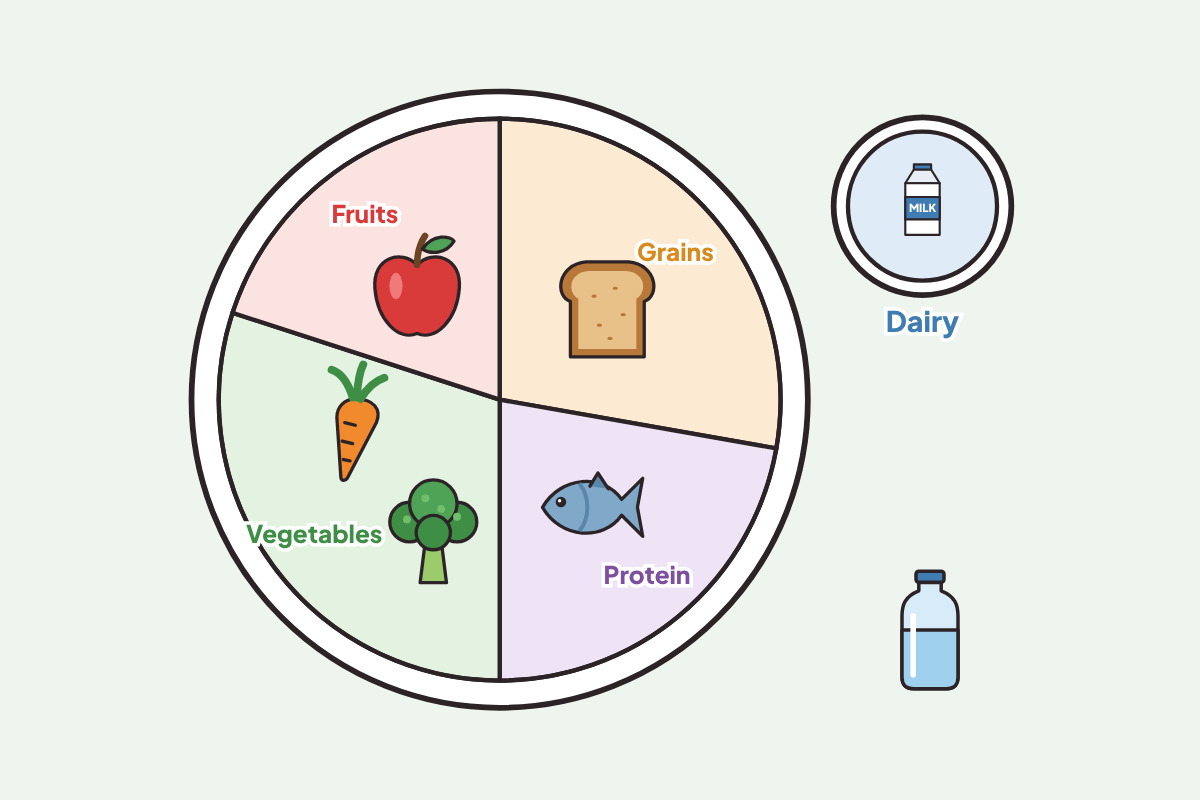
Hang the plate poster from the kit or hold up a portion plate. Point to each section as you name it and its job.
“Vegetables and fruits fill half the plate. They give us vitamins, minerals and fiber that help us stay healthy. Grains give our brains and muscles energy; whole grains like brown rice and whole-wheat bread are the best picks. Protein foods help build and repair muscles while we grow. Dairy, like milk, yogurt and cheese, has calcium for strong bones and teeth.”
Go back to the favorite meals on the board: which food groups are already there, and which are missing?
Each team gets an envelope of food cards and sorts them into the five groups, with a separate “Think about it” pile for water, pizza, fries, a juice box and soda. Review as a class, starting with the cards teams disagreed on.
Each team draws a challenge card, such as “Breakfast before a big test,” “Dinner after soccer practice” or “Pizza party makeover,” and builds the meal on their plate from the food cards. They check it against the Balanced Plate Checklist, then take 30 seconds to show their plate and one change they made.
“Your plate passes if half of it is fruits and vegetables, it has a grain, a protein and a dairy food, and you picked water or milk to drink.”
Students draw a balanced version of their favorite meal on the worksheet, label each food group and write one food group they’ll add to a meal this week. Send the family sheet home.
| Food | Where it goes | What to say |
|---|---|---|
| Tomato | Vegetables | Scientists call it a fruit because it has seeds, but we eat it like a vegetable. |
| Corn and popcorn | Corn: vegetables. Popcorn: grains | Corn on the cob is a vegetable. Popped, or ground into tortillas, it counts as a grain. |
| Beans | Protein (also a vegetable) | Beans count in both groups, so either answer can be right. |
| Eggs | Protein | They sit next to the milk in the fridge, but eggs are a protein food. |
| Pizza | Several groups | Crust (grains), cheese (dairy), sauce (vegetables). Add a salad or fruit to balance it. |
| French fries | Vegetables, every so often | Potatoes are vegetables; frying adds oil and salt. Baked or roasted potatoes are an everyday pick. |
| Juice and soda | Juice: fruits, small amounts. Soda: no group | Whole fruit has fiber that juice doesn’t. Water and milk are the best drinks. |
Students remember what they hold. Health Beet MyPlate portion plates have the food groups printed right where the food goes, so the lesson keeps working at every meal at home. Dishwasher and microwave safe, free of BPA, phthalates and melamine. Shipping is always free.
| Plate | Best for | 1 to 47 | 48+ | 96+ | 480+ |
|---|---|---|---|---|---|
| MyPlate Divided Kids Plate (8 in.) | Grades 3 to 5 | $8.95 | $6.71 | $6.27 | $5.37 |
| MyPlate Plate for Adults and Teens (10 in.) | Grades 6 to 8 | $8.95 | $6.71 | $6.27 | $5.37 |
Plate and dairy bowl sets and Spanish versions are also available. Purchase orders and tax-exempt orders welcome: email [email protected] for a quote or W-9.
Shop the kids plate Bulk and PO ordersA balanced plate fills half the plate with fruits and vegetables and adds a grain (whole grains are best), a protein food and a dairy food, with water or milk to drink. It’s the plate model from USDA MyPlate, and it matches the food groups in the 2025 to 2030 Dietary Guidelines for Americans.
Name each group with one simple job (vegetables and fruits for vitamins and fiber, grains for energy, protein for growing muscles, dairy for strong bones), then let students practice: sort picture cards into the groups and build a meal on a plate. Hands-on sorting and building sticks better than a worksheet alone.
It’s written for grades 3 to 8 and runs 45 minutes. Grades 3 to 5 sort the cards together and draw their exit ticket. Grades 6 to 8 add a menu makeover and a drink label comparison.
The 2025 to 2030 guidelines introduced a new pyramid-style graphic, and the MyPlate site is still online. The food groups are the same, and the core advice (plenty of vegetables and fruits, protein foods, dairy and whole grains, water as the main drink, little added sugar) is what this plate lesson teaches.
No. A paper plate with the sections drawn in works. A MyPlate portion plate makes the activity faster, and students can take it home to keep practicing.
Amy Roskelley is a health educator with a B.S. in Health Education and the founder of Health Beet, which makes hands-on nutrition teaching tools for schools, Head Start programs, hospitals, clinics and health departments. Also see Teaching the Diabetes Plate Method, a 30-minute lesson for adults.
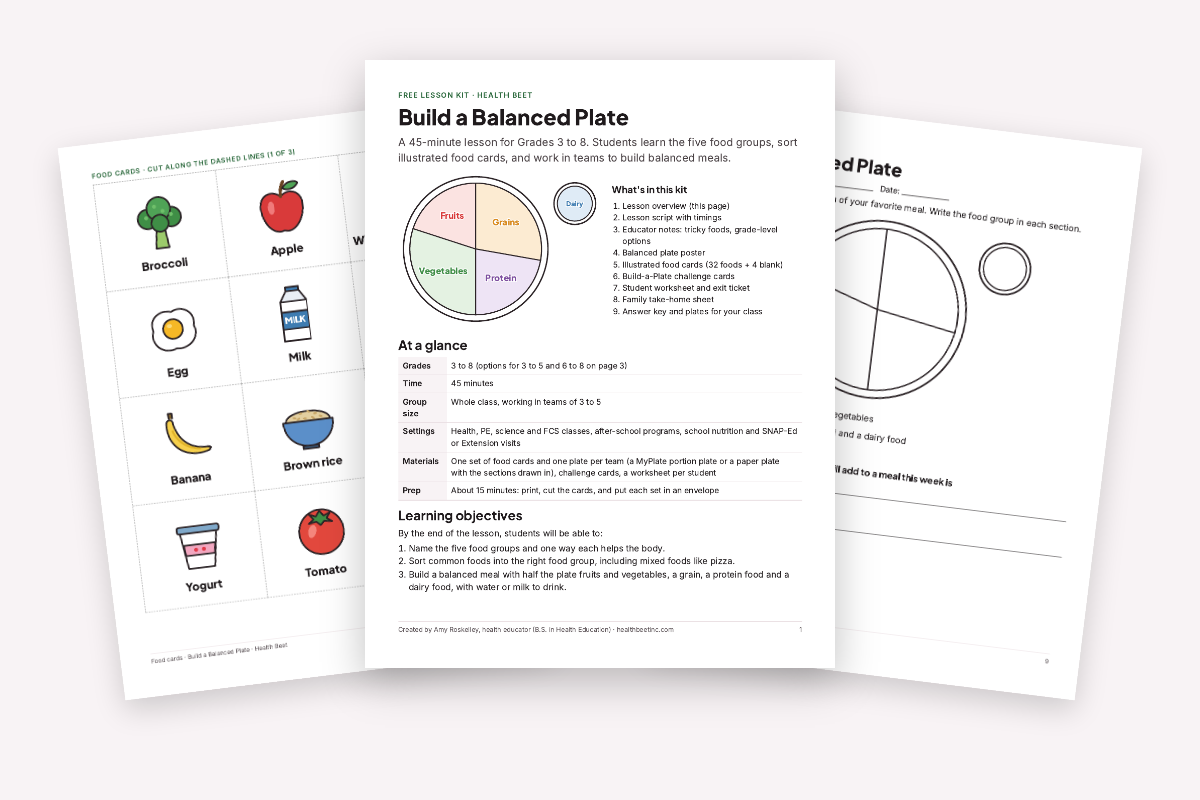
11 printable pages: lesson script, 32 illustrated food cards, a classroom poster, Build-a-Plate challenge cards, a student worksheet with exit ticket, and a family take-home sheet.